

Having goals you are working towards is important for people at all stages of life. Goal setting for seniors is essential to help them take control of their lives and health and motivate them to focus on what is important to them. Seniors can set SMART goals for all areas of their lives to help them determine an action plan for what they want to do.
Why is goal setting important for seniors?
People often do not associate setting goals for achievements and establishing new habits when they think of a person’s later years in life. However, retirement can be an excellent time to face new challenges.
Seniors often have more free time, so they need to figure out what to do with it and establish a new routine.
In some regards, goal setting is especially important for seniors. It gives seniors control over their lives and allows them to reflect on what is important to them and what interests them. They can determine what will motivate them and give them purpose.
These goals can range from fun hobbies they want to try, social commitments they want to make, ways to improve their health, or steps to take to maintain their independence.
Studies have shown that goal setting provides internal motivation and a greater sense of ownership over efforts to improve physical activity.
Finally, goal setting is also an excellent mental exercise for seniors since it requires them to think critically about what they want to change or improve in their lives, be realistic about how they can do that, and break down their goals into achievable steps.
SMART goal setting for seniors
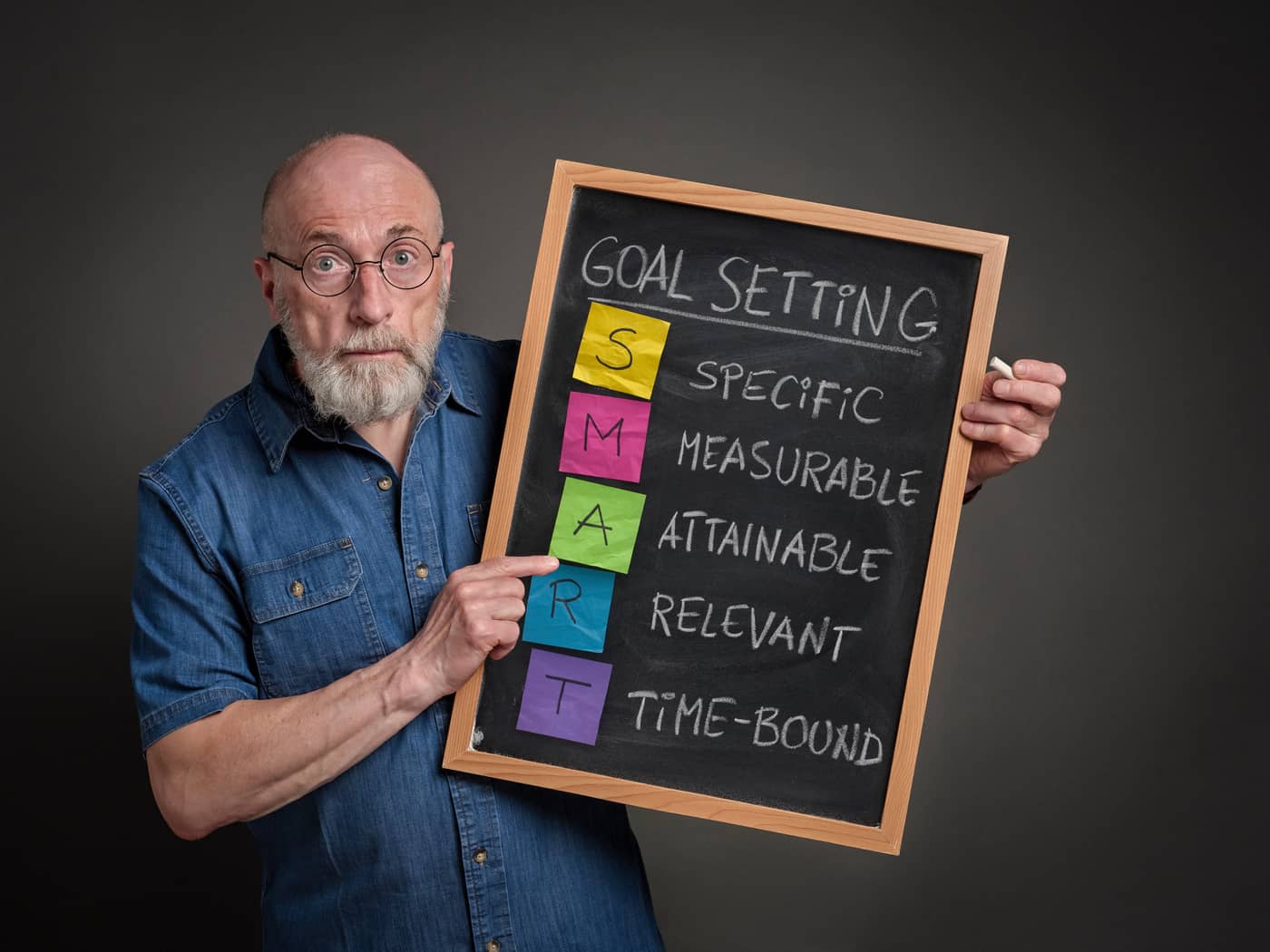
Setting goals sounds easy, but it is important that the goals you set give you something specific and achievable to work toward.
The SMART goals method can help you write your goals.
SMART goals stand for goals that are:
- Specific
- Measurable
- Attainable
- Relevant
- Time-bound.
Specific
The more specific you can be, the better. That way, you know exactly what you are working towards.
Instead of being general and saying your goal is to exercise more, be specific: “I want to walk a mile.”
Measurable
You want to track your goal and monitor your progress. To do that, you need the goal to be measurable. It is hard to measure if you talked more to your friend Sue. Measuring is much easier if you “Call Sue once a week.”
Attainable
While you want your goals to challenge you, they also need to be attainable. If you can’t walk a mile right now, setting a goal to run a marathon this year is only setting yourself up for failure.
Relevant
Check that this goal will help you achieve your broader goals and improve your life or well-being.
Time-bound
It is important to set a time frame for your goals. For example, saying, “I will write the rough draft of my book by July 1st.” gives you a deadline to work towards, which is more helpful than “I will work on my book.”
Tips for seniors setting goals
Now that you have a framework to set your goals, let’s go over 7 tips for goal setting:
- Set a mixture of daily goals, short-term goals, and long-term goals.
- Break down goals into steps that serve as mini-goals. You can have a broader goal and then set smaller SMART goals that work towards your main goal, such as setting goals to walk and eat more fruits and vegetables to help you achieve your big goal of being healthier.
- Write your goals down and make a plan to achieve them (writing SMART goals can help with this).
- Track your goals to monitor your progress, and be willing to adjust your goals if need be.
- Find someone to help hold you accountable for your goals.
- Give yourself incentives to work on your goals or reward yourself for making progress. Celebrate small successes.
- Don’t set too many goals—you will overwhelm yourself and split your focus. Set only a few goals that you can devote your time and energy to.
Examples of areas of life for seniors to set goals

When deciding what goals to make, it is important to ask yourself:
- What do I want to work towards?
- What is something I would like to learn or do more of?
- What is important to me?
- How do I want to spend my time?
- What things could improve my life?
From there, you can set goals for what you have determined is important to you. You can set goals in many different areas of your life.
Health goals
Health goals are popular because health is important to people. These goals can relate to physical, mental, or emotional health.
Seven examples of health goals for seniors includes:
- Finding new doctors
- Exercise goals
- Cardio
- Stretching
- Balance
- Strength
- Drinking more water
- Healthy diet
- Mental stimulation
- Brain games
- Puzzles
- More sleep or improved quality of sleep
- Mental and emotional health
- Self-care
- Therapy
- Meditation
- Journaling
Activity goals for seniors
Activity goals for seniors serve to determine how they will spend their free time—these can include new hobbies or things they would like to learn.
Eight examples of activities seniors may want to do are:
- Gardening
- Drawing, painting, pottery, or another form of art
- Going to museums
- Trying different restaurants
- Reading more
- Playing or learning a musical instrument
- Learning a new language
- Traveling
Social goals for older adults
Seniors may also want to set goals related to socializing, seeing friends and family, making new friends, or reconnecting with old friends.
Socializing is an important goal for seniors since, according to the National Academies of Sciences, Engineering, and Medicine (NASEM), nearly 25% of adults aged 65 or older are considered socially isolated (lack social connections).
Five ways to socialize more include:
- Having a family dinner or game night each week
- Talking on the phone or video chatting
- Taking a class, such as an art or exercise class
- Joining a club, such as a book, hiking, or bird-watching club
- Volunteering
Learn more about how to avoid social isolation.
Independence goals
Seniors can also make goals to help them maintain their independence and stay in their homes, such as:
- Financial planning
- Making their home more handicap accessible
- Looking into safe transportation
- Finding different options for housekeeping and meal planning
- Researching care options
How caregivers and family can help seniors with goal setting
Family or caregivers can help seniors with goal setting. They can start the conversation. Goal setting can be a great way to broach the difficult subject of getting help. They can work together to assess tasks of living alone and taking care of themselves (also known as activities of daily living) that seniors may need help doing.
Find out more tips for How to Talk to Elderly Parents About Accepting Help.
Once seniors set their goals, loved ones and caregivers can provide accountability, support, resources, and encouragement.
Pacific Angels Home Care can help seniors set and achieve their goals
Pacific Angels Home Care provides personalized care for seniors in Monterey, Santa Cruz, Aptos, and the surrounding areas.
Our kind and experienced caregivers can provide safe transportation to medical appointments, classes, or social outings. They can also help with housekeeping, grocery shopping, and meal planning. They can encourage seniors to drink more water, play brain games, and be more active.
We provide companionship care so seniors can have someone to talk to, play games with, or help them with their favorite hobbies.
Call us today at (831) 708-2876 or reach us online to learn more about how we can help seniors with their goals.

One Response
Very Good i have learnt . want more materials .
John Chiluwe
Senior Citizens Confederation