

When trying to determine the best living situation for those with dementia, a common question is whether they are better off in a care facility or staying at home.
Typically, dementia patients do better at home as long as they have the support they need. At home, they maintain their familiar environment and routines. Additionally, home care is able to be more personalized.
However, it is important to assess each person on an individual basis. If they require serious medical assistance, round-the-clock care, or aren’t able to get support at home, a care facility could be a better option.
How long can a person with dementia live at home
A person with dementia can live at home as long as it is safe. Their home must be free of hazards, and the individual must have the care and supervision they need.
The person’s symptoms and stage of dementia will dictate what level of supervision they require.
Check out these tips for caring with someone with dementia.
Benefits of living at home for people with dementia
There are many benefits of living at home for people with dementia.
Familiar surroundings
People with dementia are at a higher risk of transfer trauma (symptoms and anxiety associated with relocating). These symptoms can include confusion, hopelessness, fatigue, poor focus, changes in eating or sleeping, and increased susceptibility to illnesses. The new environment is unfamiliar and hard to process.
Moving is incredibly hard on them, and familiarity is important for people with dementia. At home, they are surrounded by their things, photos, and smells. It can help reduce any disorientation or anxiety and make them feel more secure.
They know the floor plan, which can make it easier to avoid incontinence issues (they can easily find the bathroom) and decrease falls.
Being in a familiar environment can also make it easier for family to visit.
Support system
At home, people also have a personalized and familiar support system. This can be friends and family. It can also be care professionals.
Comfort
Since they are in their familiar environment around people they know, they are much more comfortable. They have all their things how they like them, their home is how they have made it, they can eat the meals they are used to and like, and can keep any pets they have. The environment was made with their preference and comfort in mind.
Routines
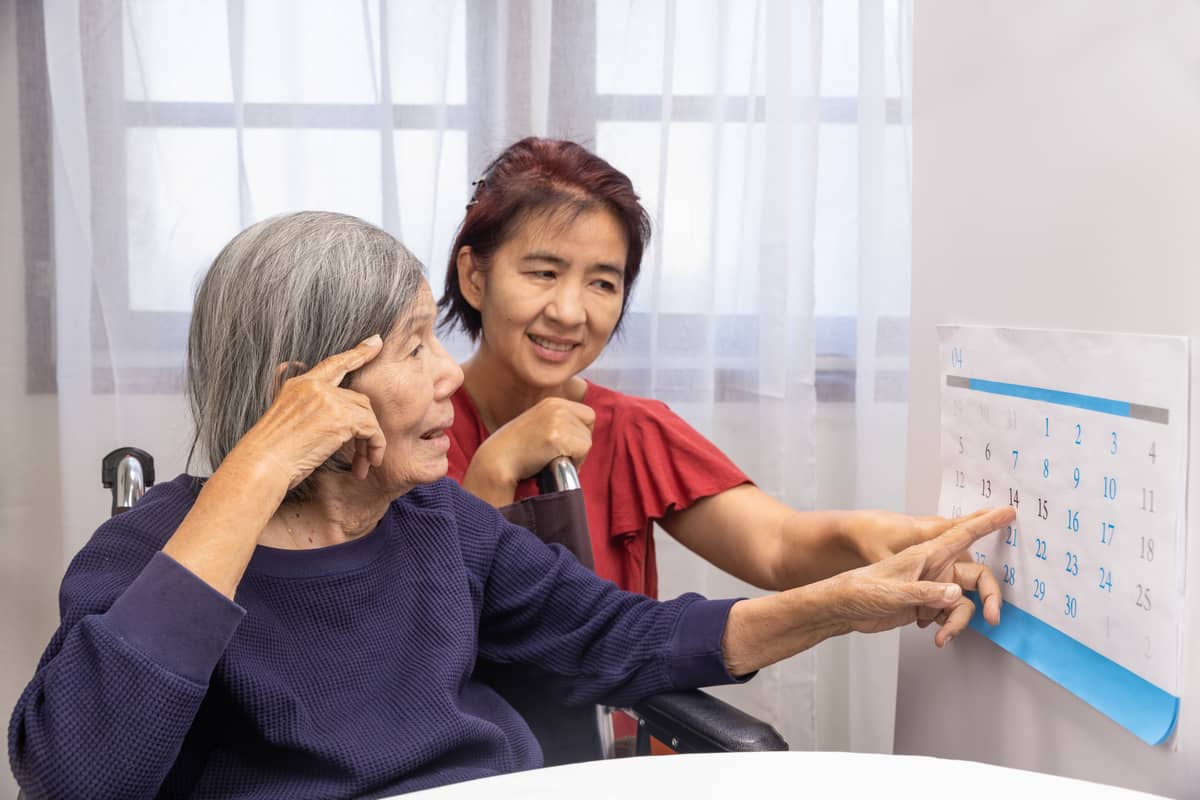
Staying in their home also means they can keep their current routines. According to the Alzheimer’s Project, routines are vital to people with dementia and can decrease agitation and behavior issues. Maintaining their routines and habits provides stability and minimizes confusion.
If their routines do need to change, that can be done slowly (versus all at once if they move into a care facility).
More agency
Keeping their environment and routines and being around familiar support can help people maintain more agency. They have more control and choices. They can participate more in their care and try to maintain as much independence as possible.
Personalized care
A big reason for having more choices is that their care can be more personalized, either with loved ones as caregivers or with home care.
Home care is one-on-one care and based on the individual’s needs. They are available as needed and offer an array of services, including personal care, companionship, housekeeping, meal prep, and transportation.
People are able to build a relationship with their caregivers.
Lower cost
Even if/when you need to hire professional caregivers, home care costs less than care facilities because you only pay for the hours you need care.
Learn more about the cost of Alzheimer’s care options.
Less risk of infection
According to studies, the grouped living quarters in care facilities increase a person’s risk of infectious disease. This makes sense when you think about a lot of people with health issues all living in one area. Staying home lowers the risk of infection for people with dementia.
Tips for caring for a parent with dementia at home
Now that you know the benefits of people with dementia staying at home, let’s look at some tips for caring for people with dementia at home.
Be aware of what patients with dementia struggle with
First, it is important to be aware of the symptoms someone with dementia may experience. According to the Mayo Clinic, these include:
- memory loss
- language difficulties (forgetting words or having trouble following a conversation)
- getting lost
- trouble with problem-solving or planning
- coordination difficulty
- confusion
- mood or personality changes (including aggression)
- agitation and anxiety
- hallucinations
These symptoms can cause serious safety concerns, such as more falls, forgetting to turn off the stove, wandering off, forgetting to take medicines or eat/drink, or forgetting to go to the bathroom. It is important to know what to look for.
Mental stimulation
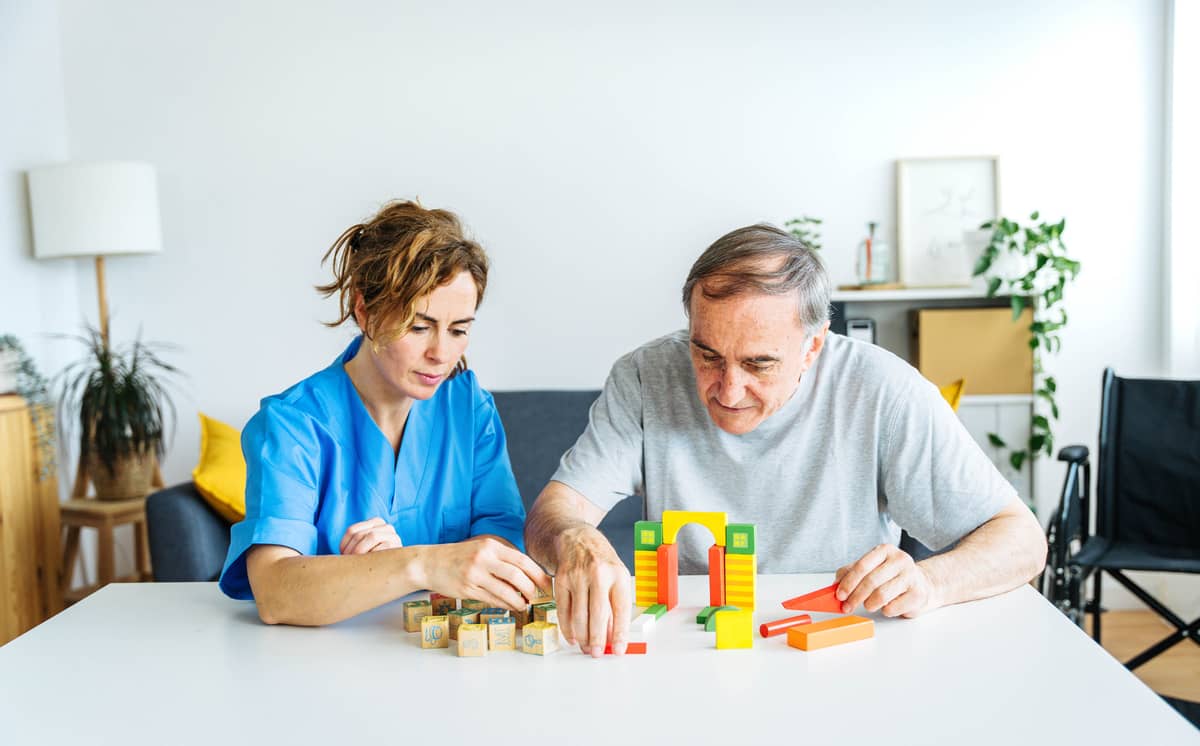
People with dementia need mental stimulation, such as:
- conversation
- listening to music
- playing games
- doing puzzles
- baking
- watching movies
- reading
- writing
- making arts and crafts
Part of supporting someone with dementia is seeing that they have stimulating activities to do.
Communication
Another big part of support is learning how to communicate with someone with dementia. You need to be clear and concise. Don’t ask too many questions (and make the ones you do less open-ended). Break things down into concrete steps.
Be calm and patient, and speak to them like an adult. Include them as much as possible on decisions about their own life and care.
Learn more tips about how to talk to someone with dementia.
Routines
As mentioned earlier, routines are vital for people with dementia. Help them continue their routines and maintain as much independence as possible. As this becomes more difficult, use reminders or visual cues to help them remember and process what they are trying to do.
Safety
Their safety is the top priority, so as their dementia progresses, steps need to be taken to ensure they stay safe. This can include:
- ensuring the home is free of fall hazards
- locking the doors
- getting assistive devices
- ensuring medication compliance
- taking their keys away
- requiring more supervision
Support for caregivers
It is also important for caregivers to remember to look after themselves. Make sure to take care of their own health, other relationships, and other responsibilities. Practice self-care. Make time for fun.
Respite care can help caregivers take a break when needed. Even if caregivers feel they are managing fine now, it is a good idea to have a respite care option readily available so they can have support.
Hire Pacific Angels Home Care for support at home
Pacific Angels Home Care specializes in Dementia and Alzheimer’s care. We offer personalized care tailored to the person’s needs whenever needed.
Our kind caregivers can help people with dementia maintain their routines and engage in stimulating activities. They can supervise and provide personal care to help with moving around, eating, going to the bathroom, bathing, and grooming. They can also offer companionship care, safe transportation, medication compliance, meal prep, housekeeping, and respite care.
For those in the Aptos, Monterey Bay, or Santa Cruz area, give us a call today at (831) 708-2876 or reach us online to request an in-home consultation!
