
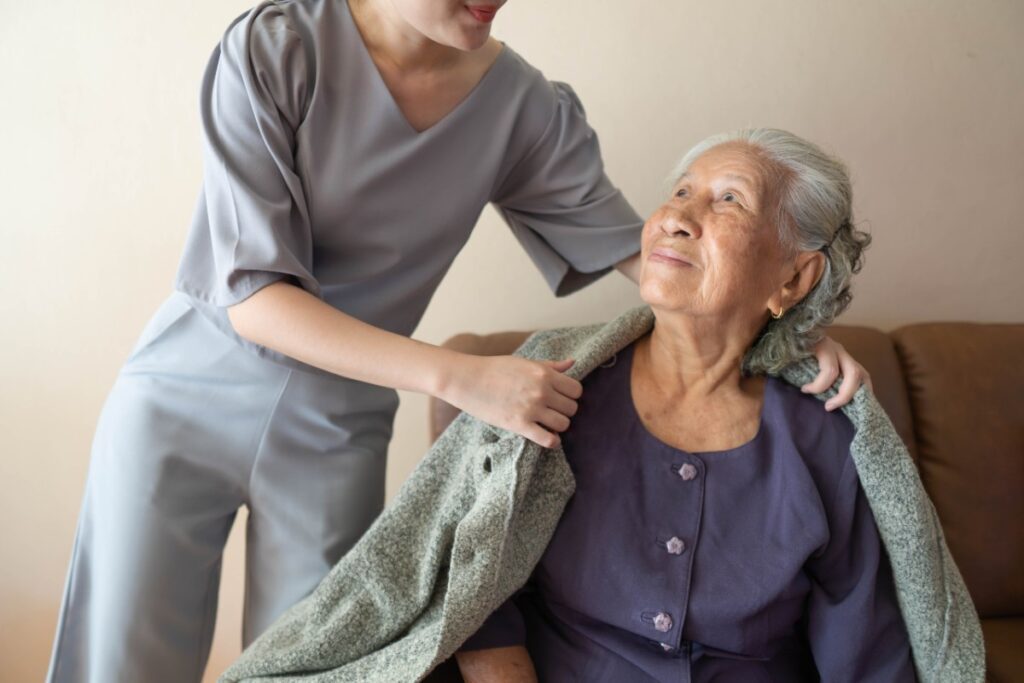
You may be concerned about your loved one’s well-being and safety and think they could use some care, but you don’t know where to start.
With so many different types of elder care services, it can be overwhelming to know what the options are and which one best meets your loved one’s needs.
The elder care services largely differ in three main areas:
- How much care is needed
- How often the care is needed
- Where the care is provided
There are nine types of elder care services: care by friends and family, adult day programs, respite care, independent living facilities, assisted living facilities, memory care facilities, nursing homes, home health care, and home care.
Let’s look at what each elder care service entails, where the care is provided, and how each service differs.
Independent living
In independent living communities (also known as retirement communities), elders rent an apartment.
There is no medical help or help with their activities of daily living. The community offers social activities and sometimes includes transportation or meal planning.
This is ideal for elderly individuals who do not need help but need social interaction.
Assisted living
At assisted living facilities, individuals live in their own rooms or apartments and are also offered social activities.
Assisted living facilities offer more care. They provide meals, supervision, some medical care, and help with activities of daily living, such as bathing, dressing, moving around, and managing medication.
Memory care

Memory care services can be offered at assisted living communities or at their own facilities.
These residences provide the same care as assisted living facilities and specialized care for those with Alzheimer’s or dementia.
They have caregivers trained to deal with these conditions and provide extra safety measures.
This extra care does make them significantly more expensive than assisted living facilities. Learn more by reading Alzheimer’s Care Cost: What Can You Expect to Pay?
Nursing homes
Nursing homes also provide meals, housekeeping, supervision, social activities, and help with activities of daily living.
According to the National Institute on Aging (NIH), nursing homes also provide the highest level of comprehensive medical care of any long-term facility.
The homes can provide either private or shared rooms, and there is access to 24/7 medical care from nurses.
These homes are best for elderly individuals needing extensive, round-the-clock medical care.
Family and friends provided care
One of the biggest forms of elder care is the care provided by family and friends.
This could mean helping with transportation, handling their finances, meal preparation, or housekeeping.
It could also mean taking on a more intensive caregiver role or your loved one moving into your home.
Respite care
Family and friends that provide care for their loved ones can need some help and a short break. This is why respite care is another elder care service.
Respite care is when a paid professional helps serve as a caregiver while the primary caregiver (or caregivers) travel, work, take care of other responsibilities, or practice much-needed self-care.
Assisted living communities, nursing homes, and home care providers all offer respite care. Which one is right for you and your loved one depends on if they need more care and want to stay at a facility or if they just need help with their activities of daily living and want to stay at home.
You can find out more about respite care by reading our guide: Respite Elderly Care: What are Respite Care Services?
Adult day programs
Another example of the different types of elder care services are adult day programs that can be used to give caregivers a break or during the day when caregivers work.
Adult day service centers serve as a safe environment for elderly individuals to go during business hours on weekdays to socialize and partake in planned activities such as art and music classes.
Meals are provided, and some even include transportation services.
Home health care
Home health care is medical assistance at home provided by a licensed medical provider such as a nurse, nurse’s aide, occupational therapist, or physical therapist.
Home health care workers can be found and hired individually or through an agency.
They can offer help monitoring medical conditions, wound care, medication management, and IV assistance.
This can be a good option for people with ongoing serious medical conditions or those recovering from surgery who want to stay in their own home instead of a nursing home.
As Medicare states, the goal of home health care is to help people receive treatment from home in an effort to slow decline, maintain independence, and/or recover.
Home care

Home care is non-medical elder care that allows seniors to stay in their homes and be as independent as possible.
Home care can be provided by individual caregivers or home care agencies.
Agencies make it much easier for you by handling the business aspects, including hiring, screening (including background checks), providing ongoing training, paying directly (and providing tax documents such as a W2 or 1099), and firing.
They also offer oversight and can provide more than one caregiver or a backup caregiver so that you know that you will always have care when needed.
Home care elder services can be tailored to each person’s needs and are available to help as much or as little as needed.
Home caregivers provide personal care. This means helping elderly individuals with their activities of daily living, such as bathing, grooming, going to the bathroom, and moving around.
In addition to help with personal care, some common home care services are:
- Companion care
- Meal preparation
- Light housekeeping
- Transportation
- Medication compliance
- Handling correspondence
As mentioned above, home caregivers also can be brought on to provide respite care to help you manage being a caregiver. They can be a great part of your support team to help prevent caregiver burnout.
Which type of elder care service is right for you and your loved one?
When deciding between the different types of elder care services to use, consider how much medical care is needed and if they want to and are able to stay in their homes.
If you want a living facility, consider independent living facilities for social connections, assisted living facilities for social interactions and help with personal care, and nursing homes if they need extensive medical care.
For informal care, you can rely on family and friends. For short-term care, look into respite care.
Adult day programs are great for seniors who need social interaction or supervision during the day while their loved ones work.
If your loved one wants to remain in their homes and needs medical care, home health care could be right for you.
Home care is a great option for people who want to stay at home but need help with their daily activities, transportation, housework, meal planning, or companionship.
If you live in the Monterey Bay or Santa Cruz area and are interested in home care, call (831) 708-2876 or reach us online to learn more about our elder care services!

One Response
Great overview of the different types of elder care services! It’s helpful to understand the options available for families looking for the best care for their loved ones.