
Recovering from a stroke is a long-term process. It can be difficult to know what kind of care is available and what kind of care someone needs.
There are multiple types of stroke rehabilitation providers, including stroke home care, that all share the goal of helping the stroke survivor live at home and be as independent as possible.
Health issues caused by stroke
According to the National Institute of Neurological Disorders and Stroke, strokes generally cause five main types of disabilities:
- Paralysis or issues with movement
- Sensory disturbances
- Difficulty with language
- Cognitive or memory problems
- Emotional or behavioral changes
Let’s look at each type of health issue.
Paralysis or issues with movement
A stroke can cause paralysis or weakness on one side of the body, trouble swallowing, or trouble with balance or moving.
Sensory disturbances
Strokes can lead to bladder or bowel control issues.
People can experience numbness or tingling in a weakened limb or chronic pain.
Difficulty with language
After a stroke, people can have trouble speaking, reading, or writing. They have trouble using the right words or understanding their meaning.
Cognitive or memory problems
Memory problems, particularly short-term memory, can be caused by a stroke. They may be confused, have trouble learning new things, or be unable to complete tasks that require multiple steps.
They may not be able to acknowledge the health problems that the stroke caused.
Emotional or behavioral changes
Emotional or behavioral changes can be caused by brain damage from the stroke. People may feel anxious, angry, afraid, or depressed.
What type of care is needed after a stroke?
After a stroke, the person receives stroke rehabilitation care.
The rehab is tailored to address the individual’s needs since the type of care needed after a stroke depends on how serious the stroke was and what parts of the brain were damaged.
Throughout the recovery process, the types of care needed will change, but the main goal of stroke rehabilitation remains to help people be independent and have the best quality of life possible.
Relearning activities of daily living
While rehabilitation doesn’t reverse brain damage, the brain can learn to rewire itself, leading to improved function.
People can relearn skills they lost after the stroke and learn new ways to compensate for things they are no longer able to do, such as communicating or walking with assistive devices.
The biggest aspect of relearning skills is relearning how to complete their activities of daily living (ADLs).
Activities of daily living (ADLs) are the core skills necessary to care for yourself, including:
- Mobility: walking
- Transfers: getting in and out of bed and chairs
- Dressing: selecting appropriate clothes and dressing/undressing
- Grooming: bathing/showering and brushing teeth
- Toileting: bladder and bowel control and getting to and using the toilet
- Eating: feeding themselves
Learn more about activities of daily living by reading our guide: Activities of Daily Living (ADLs): Checklist and Examples.
Preventing new medical problems
Another important part of their care is to prevent new medical problems, such as infection, blood clots, and injuries from falls.
Can you do stroke rehab at home?
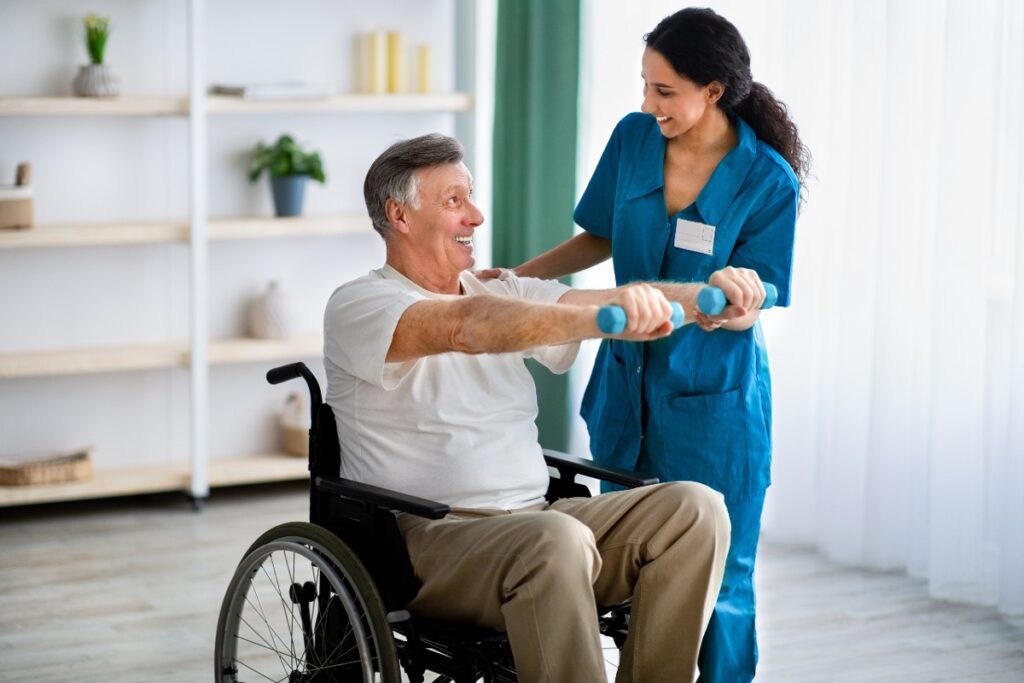
Stroke rehab can be done at home with care providers, such as physical and occupational therapists, coming to the person’s home.
Before leaving the hospital, a rehab care plan is made, including where they will go and what medical professionals will participate in the person’s rehabilitation.
Some people move into a medical facility for rehabilitation, such as a rehab unit within the hospital or a nursing facility.
Other people return home after leaving the hospital and receive care from an outpatient unit or at home.
Stroke rehabilitation providers
Rehab usually begins in the hospital after the person is stable. Therapists help with range of motion and mobility exercises, and they help them relearn their activities of daily living.
After the hospital, people involved in post-stroke rehabilitation may include:
- Doctors
- Mental health professional
- Physical therapist
- Occupational therapist
- Speech therapist
- Home health care
- Home care
Any or all of these professionals may be utilized during the rehabilitation process.
Let’s look at each type of provider more in-depth.
Doctors
To manage their care and medications, people will have doctors, including primary care physicians, neurologists, or geriatricians.
Mental health professional
After having a stroke, it can be helpful for patients to see a mental health professional to help them cope with any emotional or behavioral changes.
They can also help them deal with the emotional toll that comes with having serious health challenges.
Physical therapy
Rehab after a stroke mainly focuses on physical therapy to help people relearn motor skills to help with movement, balance, and coordination.
Occupational therapy
Stroke rehab can also include occupational therapy to ensure people are safe in their environment and help people relearn how to complete their activities of daily living and become as independent as possible.
Speech therapy
For those that have difficulty speaking or with cognition, speech therapy helps them relearn how to think of and form words and be able to communicate.
Speech therapists also can help with trouble swallowing.
Home health care
Home health care is medical care provided at home. Care from physical, occupational, or speech therapists at home is home health care.
Home health care can also be provided by registered nurses (RNs) or licensed practical nurses (LPNs) to perform medical tests, draw blood, offer wound care, administer medication, monitor their vitals, or help with pain management.
Home care
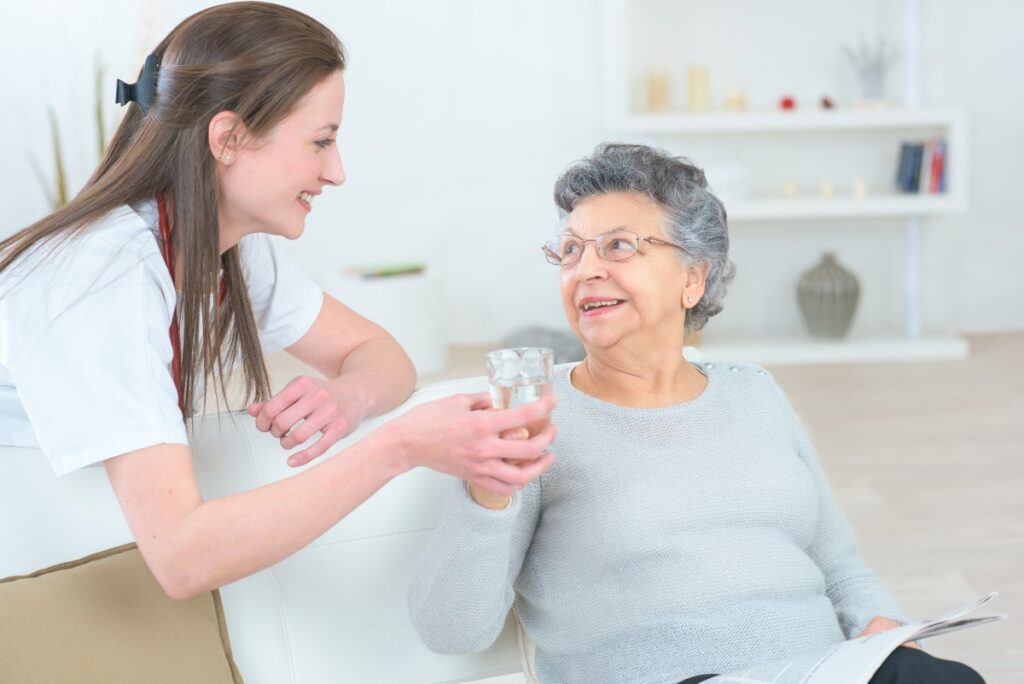
Home care providers offer nonmedical care (at a lower cost) to help people with their activities of daily living, cleaning, laundry, preparing meals, transportation, and companionship.
Home caregivers support stroke rehabilitation by helping them recover and be more independent.
They can help family and friends with caregiving. They are available as much or as little as needed and tailor their services to each person’s needs.
Let’s look at what home care services are offered.
Home care services for stroke patients
Home care providers offer a number of services that can be tailored to each individual’s needs.
Care management
Stroke rehabilitation can be overwhelming. There are a lot of different providers, appointments, and medications to schedule and remember.
Home caregivers can help you manage your loved one’s care. They can also make sure that they are taking the right medicine (and dose) at the right time.
Transportation
Home care providers can also provide transportation to appointments.
Supervise
Home caregivers can supervise them to ensure they are well and help them perform their rehab exercises.
You will have peace of mind knowing that your loved one is being looked after.
Personal care (help with ADLs)
Home caregivers are trained to help people with their activities of daily living. They can help them go to the bathroom, bathe, groom, and get dressed. They have patience and compassion to help maintain your loved one’s dignity.
They can also help them move around and eat.
Learn more about Personal Care here.
Meal preparation
Home caregivers can also help with grocery shopping and preparing meals.
Light housekeeping
Care providers can help keep the stroke survivor’s home clean and laundry done.
Companionship
Social isolation is a serious problem.
According to the CDC and the National Institute on Aging (NIA), social isolation can increase the risk of cognitive decline, weakened immune system, dementia, stroke, depression, and premature death.
Home caregivers can help prevent social isolation by providing social connection and emotional support. They can talk, play games, watch movies, or participate in the person’s favorite hobby.
Help prevent new medical problems
Home caregivers do not provide medical care, but they can help prevent new medical problems. They can make sure that they remove hazards and avoid falls.
They can also notice any signs of stroke (or any other medical emergency) and ensure they get care quickly, which will drastically improve their outcome.
Respite care
Home care providers also help caregivers by giving them a much-deserved break.
They can step in and take care of your loved one while you attend to other responsibilities, like work or family, or practice self-care.
Ready to hire stroke home care?
Our compassionate and trained caregivers at Pacific Angels Home Care tailor their care to each individual’s needs.
We can become a core part of the person’s stroke rehabilitation or simply be there to offer respite care when the main caregivers need some help. For seniors who need a caregiver present at all hours during stroke recovery, we also provide 24-hour home care in Santa Cruz.
If you are in the Santa Cruz area and want to learn more about how we can help your loved one with stroke rehabilitation, call (831) 708-2876 or reach us online to schedule a free in-home consultation.
