
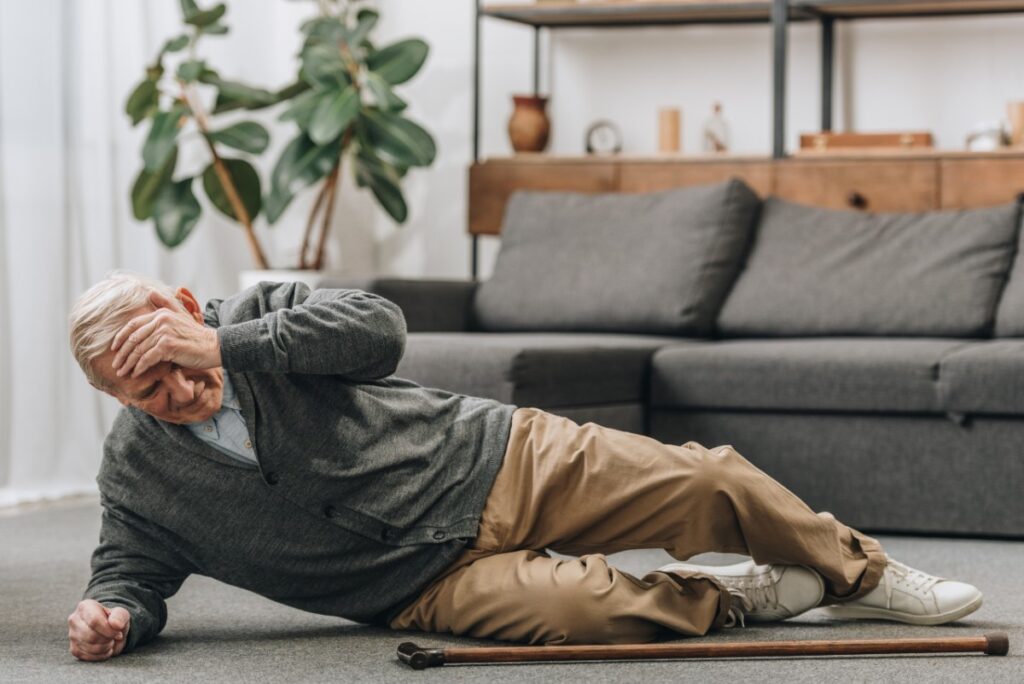
According to the CDC, there were 3 million emergency room visits for older adults falling in 2019.
Falls are a serious concern for seniors—they can cause severe injuries and decrease their independence.
Fortunately, there are some changes you can make to help prevent falls in seniors.
Risk factors for falls in the elderly
According to the National Institute on Aging (NIH), there are several factors that increase the risk of falls in the elderly, including:
- Balance problems
- Problems walking
- Safety hazards in your home or environment
- Blood pressure dropping when you stand up
- Senses (such as eyesight and hearing) not being as sharp
- Decrease in reflexes
- Incontinence (since the senior is rushing to the bathroom)
- Cognitive impairment or dementia
- Loss of muscle mass
- Foot problems or unsafe footwear
- Medications that cause dizziness or confusion
How to prevent falls in the elderly at home
There are many things that you can do to prevent falls at home, such as:
- Get plenty of sleep
- Limit alcohol consumption
- Keep things within easy reach
- Use a shoulder bag or backpack to keep your hands free
- Immediately clean up spills
- Reduce your fear of falling by speaking to your doctor or a therapist
- Wear properly fitting pants (ones that don’t drag on the ground)
Let’s look at some of the most helpful options in more detail below.
Talk to your health care team
Talk to your healthcare providers about your risk of falling and how you can prevent falling.
Ask them about your medication—if any of the side effects could increase your risk of falling or if any sleep aids could make you drowsy or dizzy.
Make sure to discuss any previous times you fell or almost fell and your health conditions.
Get their suggestions for any exercises you can and should be doing.
Your doctor may recommend seeing a physical therapist to help you develop a tailored exercise plan, improve your balance and strength, and become more comfortable exercising.
Wear the right shoes
Wearing the right kind of shoes (even at home) is a simple but effective way to help prevent falls.
The right shoes fit, offer support, are flat, and have nonslip soles.
Footwear to avoid:
- Only socks (or at least get nonslip socks with grips on the soles)
- Anything with smooth or slick soles
- Slippers
- High heels
If you have trouble wearing shoes with laces or could trip over your laces, shoes with velcro straps or elastic no-tie laces may also be a good idea.
Remove fall hazards

Remove all the clutter, especially from hallways, stairs, and other areas where you walk.
The stairs need to be completely clear and in good condition.
Remove or secure any loose rugs or carpets and repair loose floorboards.
Make sure that your furniture, such as coffee tables or plants, is not in the way of your walking.
Remove any cords from walkways and ensure that the cords are taped down or behind furniture throughout the house.
Use the CDC’s Fall Prevention Checklist to make sure that your home is safe.
Make sure there is adequate lighting
Make sure that there is adequate light, especially at the stairs. Get in the habit of turning on the lights before you go on the stairs.
You should also:
- Have bright lights.
- Have nightlights in your room, bathroom, and hallways.
- Get lights that are easy to turn on if you have to get up in the middle of the night.
- Keep the path to the light switches clear.
- Have flashlights in numerous places around the house that are easy to get to in case you lose power.
Be careful moving
Focus on moving carefully—stand up slowly and be extra careful on the stairs.
If you have a hard time on the stairs, you could get a stairlift, limit trips up and down the stairs, or try to live on one level.
Be cautious in bad weather
Be extra careful when it is wet or icy.
Shovel snow and use salt on icy areas.
If the weather is really bad, consider staying inside.
Get your vision checked
Get your vision checked to ensure you are wearing the correct prescription. Make sure to wear your glasses/contacts are directed.
Stay active
Some seniors are afraid of falling, so they start to avoid certain activities and become less active.
You don’t want to do this because staying active helps prevent falls. Regular exercise strengthens your muscles, makes you more flexible, and can improve your balance.
Keep walking, stretching, and exercising.
Some exercises you could try (after talking to your doctor) are:
- Water workouts
- Tai-chi
- Yoga
- Pilates
- Strength building by lifting weights or using resistance bands
- At-home exercises
- Senior exercise program at a community center or gym
Use assistive devices
You can use assistive devices to help you prevent falls, including:
- A cane
- Walker
- Railings on both sides of stairs (even if there are only a few stairs)
- A device that allows you to push a button to call for help
- Nonslip mats in your bathroom (especially in the bathtub and/or shower), kitchen, porch, or anywhere else that can be slippery or become wet
- Grab bars in the bathtub and/or shower and by the toilet
- A shower chair so you can shower while sitting
- Hand-held shower
- Walk-in bathtub
- A toilet seat raiser
- Glow-in-the-dark light switches or light switches you can activate remotely (or with your voice or clapping)
- A stairlift
Meet with an occupational therapist
You can meet with an occupational therapist to help you make sure that your home is as safe as possible, decide what assistive devices could help you, and come up with a fall prevention plan.
Hire home care

Home care can help prevent falls in seniors by helping them move around, helping with housekeeping, ensuring their home is free from fall hazards, providing transportation (especially useful in bad weather), and being there to monitor them and ensure they are safe.
Part of personal care provided by home care agencies is that caregivers help people with their activities of daily living (ADLs), which include going to the bathroom, bathing, getting dressed, getting up from bed or chairs, and moving around.
Having this support can help prevent falls in seniors, as well as help them with any other health challenges they face.
Here at Pacific Angels Home Care, our compassionate caregivers can come as much as needed and offer any of these services to help seniors avoid falling.
If you are in the Santa Cruz area, call (831) 708-2876 or reach us online to schedule a free in-home consultation to learn more about how we can help you or your loved one stay safe.
