
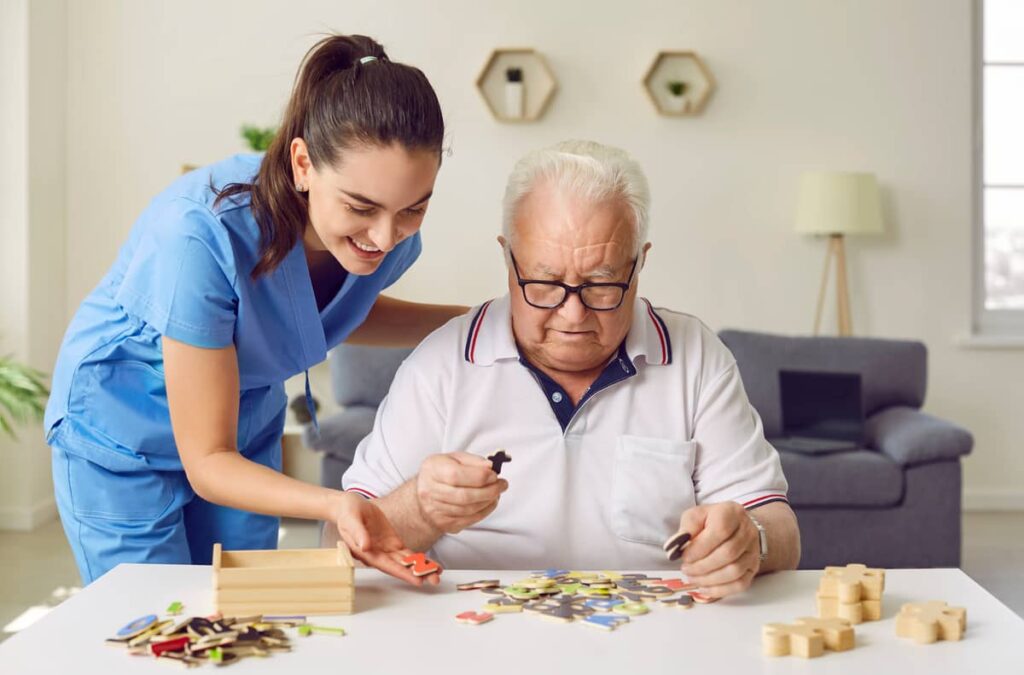
Caring for a senior with dementia or Alzheimer’s is a difficult and overwhelming task. It can be confusing to figure out what kind of care your loved one needs. Let’s break down the options of memory care for seniors in Monterey, CA.
What is memory care?
Memory care is specialized long-term care for people with dementia, Alzheimer’s, or other forms of cognitive impairment. It is provided by people trained in dementia or Alzheimer’s care, including communication techniques and behavior management. It focuses on safety, cognitive stimulation, structure, and quality of life.
How do you know when someone needs memory care?
It can be difficult to know when someone needs memory care because the decline can happen gradually.
Getting care earlier than later can help prevent dangerous situations and ensure that seniors are getting the care they need.
Let’s look at 8 areas to monitor. When these signs become frequent or severe, memory care needs to be considered to ensure everyone’s safety.
Declining health
If they cannot properly take care of their health, they may show other areas of declining health that require additional care, such as:
- forgetting medications or doctor appointments
- skipping meals or not getting proper nutrition
- unexpected weight loss
- unexplained cuts or bruises
- incontinence
- mobility issues
Home concerns
Another sign they need help is if they cannot take care of their home. This could look like the house becoming a mess, laundry piling up, or food going bad in the fridge. Needing help around the house can be a first area that seniors need help with.
Can’t perform activities of daily living
As their illness progresses, they will also start needing help with taking care of themselves. They may need assistance with their activities of daily living (ADLs), including bathing, grooming, dressing, going to the bathroom, eating, and moving around.
Look for issues with their personal hygiene or unkempt appearance. Also, monitor if they seem to be unable to prepare meals or forget to eat.
Get our checklist for activities of daily living to see the areas they need help with.
Serious memory issues
Look for signs that their memory issues are getting more serious, such as:
- being confused about when (the date or even year) or where they are (the location)
- difficulty with everyday tasks (forgetting how to do things they have done many times before)
- inability to hold conversations
- having trouble finding the right words or repeating questions
- forgetting names or familiar places
- forgetting to pay bills or attend doctor appointments
Behavior changes
In addition to memory problems, dementia and Alzheimer’s can also cause mood and behavior changes. These can include:
- confusion
- agitation
- disorientation
- personality or mood changes
- irritability
- inappropriate behavior
- hallucinations
- paranoia
These behavior or mood changes are signs they may need more care.
Social isolation
Another sign is withdrawing. It is important for everyone to maintain social connections, but especially for those with dementia or Alzheimer’s. According to the National Institute on Aging, social isolation (a lack of social connections) can lead to a higher risk of high blood pressure, heart disease, weakened immune system, anxiety, depression, and cognitive decline.
Memory care can provide social interactions and companionship for seniors.
Learn more about how to prevent social isolation among seniors.
Safety concerns
A big sign that seniors need care is when there are safety concerns, such as if they:
- leave stove on
- wander off
- fall
- get lost (even in their home)
Safety concerns can also be for the loved ones who are acting as caregivers since people with these conditions can become aggressive or abusive toward loved ones as the conditions worsen.
Caregiver stress
Taking both the safety and the needs of the caregiver into consideration is important. If the caregivers are suffering from burnout, neglecting their own needs, or the care is beyond their capabilities to manage, memory care may be necessary.
Memory care options for seniors in Monterey
Memory care can be provided in residential facilities (such as assisted living facilities or nursing homes) or by home care providers.
Let’s look at the core features of both types of care.
Residential facilities
Residential facilities (assisted living facilities or nursing homes) may offer memory care in specific buildings or wings. These dedicated areas provide:
- staff trained in dementia or Alzheimer’s care
- cognitively stimulating activities (such as music, art, or cognitive exercises)
- assistance with activities of daily living
- meals and hydration monitoring
- medication compliance
- on-site nurses for medical care
- socialization with other residents
- 24/7 supervision
- extra security (controlled entrances and exits to prevent wandering off)
- structured routine at the facility
There are several residential facilities that provide memory care in Monterey, such as Ivy Park and Merrill Gardens.
Home care
Memory care can also be provided in the senior’s own home by professional caregivers.
Home care provides:
- seniors the ability to stay in their homes
- a way for seniors to maintain as much independence as possible
- caregivers trained in dementia or Alzheimer’s care
- care plans tailored to each senior’s needs
- available as little or as much as needed (including offered as respite care or 24/7 monitoring)
- one-on-one supervision and interaction
- cognitively stimulating activities (such as music, art, reading, puzzles, or games)
- fall prevention and home safety modifications
- assistance with activities of daily living
- meals and hydration monitoring
- medication compliance
- companionship care (including being emotional support during this hard time)
- safe transportation
- accompanying them to appointments, outings, errands, or events
- encouraging and facilitating socialization
- structured daily routine at home
Which type of memory care is best?
Now that you know the types of memory care available, let’s look at the criteria to consider when picking the right option for your loved one.
Degree of needed medical care or supervision
Residential memory care is best for seniors with advanced dementia who need constant supervision and medical care. It is also needed when there are safety concerns for family caregivers.
If the senior does not need that level of care or wants one-on-one care, home care can be the better option.
Level of family involvement
If the family is willing and able to stay involved in the day-to-day care, home care is a better option since it comes with more flexibility and can be utilized as needed.
If the family isn’t able or willing to serve as caregivers or coordinate ongoing care at home, residential memory care is a better option.
Senior’s preference
Consider the senior’s preference. Do they want to live in a residential facility and have planned social activities with other residents? If so, residential memory care is the best option.
Do they want to age in place or maintain more independence? If so, home care is the best option. The familiar environment and maintaining their typical routine can be a comfort to seniors when they become confused or agitated.
Cost
According to Genworth’s 2024 study, the average cost of assisted living in California is $7,350 a month. Additionally, memory care is estimated to be 20-30% more. Home care is a more affordable option (especially if they do not need round-the-clock care or if family/friend caregivers can also be involved part of the time).
Learn more about the cost of Alzheimer’s and dementia care.
Get started with Pacific Angel’s memory care

At Pacific Angels Home Care, our compassionate caregivers are specially trained to provide care to seniors with dementia or Alzheimer’s. They understand the stages and symptoms of these diseases. They know the best ways to communicate with them and manage behavioral concerns. They can ensure they are safe and getting the care they need while also being encouraged to be as independent as possible.
Our trusted caregivers also offer personal care (help with ADLs), housekeeping, safe transportation, meal prep, companionship care, and respite care. We tailor our services to each client’s needs (and adjust as needed) and are available for as few or as many hours as you need.
For those looking for memory care for seniors in Monterey, give us a call today at (831) 708-2876 or reach us online to request a free consultation.
